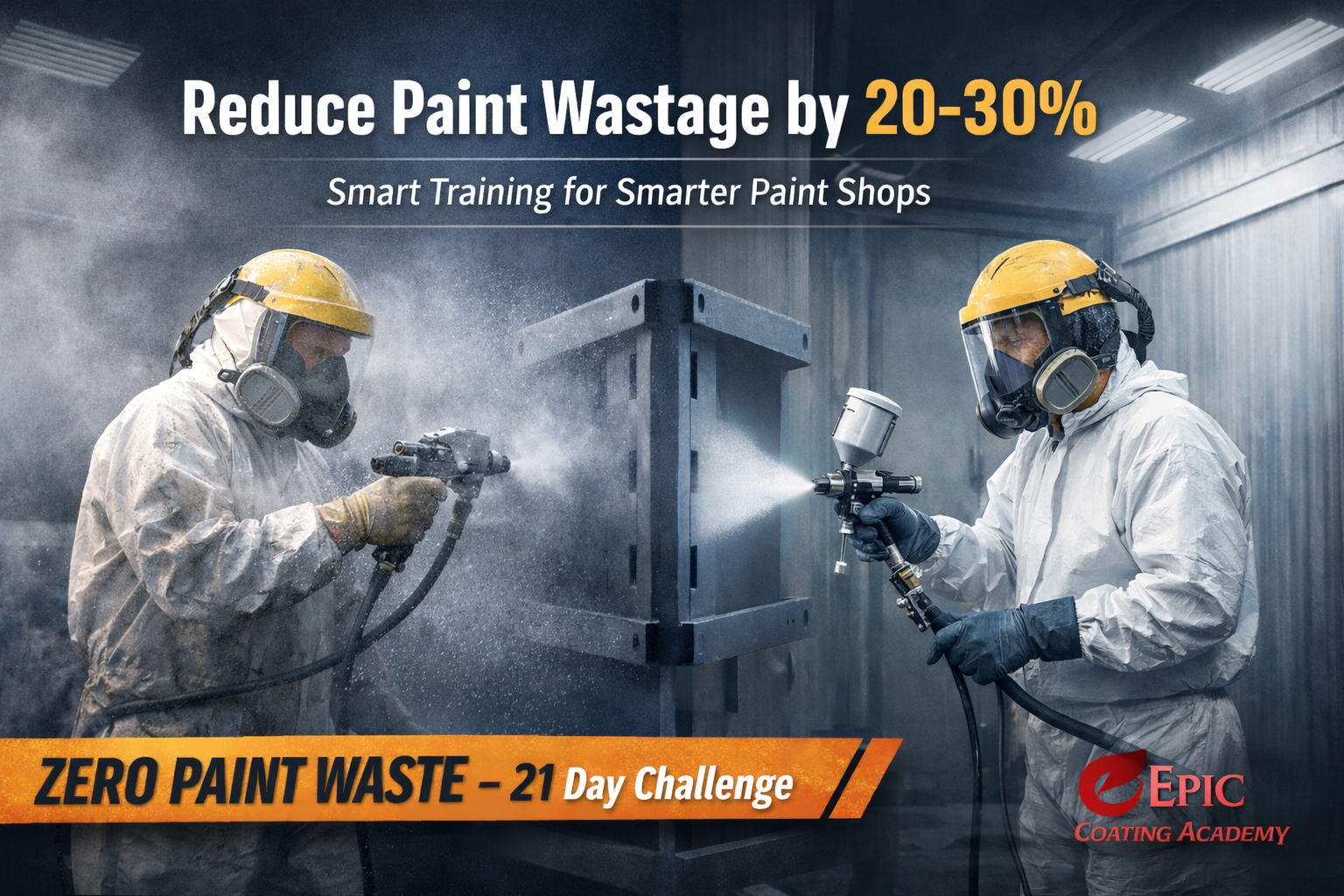
How to Cut Paint Waste in Industrial Paint Shops by 20–30% Many industrial paint dealers are concerned about paint waste.
Many of the paints that companies buy never make it to the top of the container. Instead, it is wasted as extra material, overspray, or during repairs.
With the right knowledge, skills, and training, we can reduce paint waste by 20% to 30%. This blog post explains the subject in plain language and offers useful solutions that can be applied to everyday situations.
This article should be read by students, aspiring artists, business owners, and supervisors who wish to improve their skills rather than merely learn about them.
Simple Ways to Understand Paint Waste
Paint loss happens when paint is bought but not adequately applied to the component. One example is paint that has been lost in the air (overspray). Paint was lost as a result of poor mixing. Paint was employed once again for professional purposes. paint that hasn’t been used in packaging yet. Because of the inadequate spray technique, insufficient paint was utilized. People are unaware that many paint businesses lose between 30% and 50% of their inventory.
In industrial painting, paint loss is frequently caused by:
1. Using too much paint
The most common cause of paint loss is overspray. Paint particles that fall short of the top are discarded. This happens because the spray cannon is too far away. Too much air pressure The spray angle is not correct. Insufficient painting control, Low transfer efficiency, The degree to which paint adheres to the surface is known as its transfer efficiency. When the transfer rates are low, the spray guns are either ancient or broken. The operators have not received training. The incorrect size of opening is picked. You cannot modify the paint parameters.
3. Incorrectly mixing paint.
Many artists use more paint than is required.
Among the common mistakes are:
Lack of a surface area figure
The improper ratio for thinning
There is no conventional method to blend.
4. Do over due to poor application.
Rework requires double the amount of paint.
Reasons for doing it again:
Stretching and running
Apply spray-dry.
Different thicknesses Inadequate surface area
5. Disobeying a set of regulations
Most paint businesses function on the basis of experience rather than guidelines. It occurs often:
There are no spraying standard operating procedures.There is no method of measuring success.There is no talent test. Paint shops continue to make these mistakes due to a lack of training. Many painters practice painting by observing others. Other people make mistakes as a result of this. People may continue to act badly if they lack the requisite industrial painting skills.
Negative behaviors continue to happen. Efficiency never gets better. Prices remain high. Focus only on production speed. It’s faster than great when more overspray occurs. Rework increases. More paint goes to waste. There is nothing to monitor or measure.
“What cannot be measured cannot be improved.” The majority of paint retailers do not maintain:
How much paint is used for each part? Transfer effectiveness. The percentage of rework Here is a step-by-step guide on how to stop wasting paint.
Step 1: Learn to use paint.
To begin, measure.
Paint is used every shift.
The parts were painted.
Painting over or wasting paint raises awareness.
Step 2: Change the method you spray.
Simply spraying correctly may save waste by 10-15%.
Key points:
Maintain the correct gun distance.
Maintain a constant spray pace.
Make certain you meet.
Maintain the appropriate angle.
Step 3: Set the appropriate air pressure and other variables.Reduced airflow leads to increased overspray.
The correct technique to adjust:
Reduces paint fog
This technique enhances the final result.
Keeps stuff.
Step 4: Get the proper spray gear.
Using the proper spray pistol and tip improves the move’s effectiveness.
Good things:
More paint reaches the top.
There’s less paint in the air.
More power to the painter!
Step 5: Set parameters for paint mixing.Create basic rules:
Determine the amount of paint required before mixing it. Stick to the established cutting ratios. Mix just what you need. By itself, this could save 5-8% of the paint. Structured training may help reduce paint loss. The most essential way to reduce paint waste is via training. When artists know why painting is a waste, how does an artist’s technique affect the pricing of their work?
How to get the task done?
The outcomes improve on their own. What Does Good Training Teach? The correct method is to spray. Improvements in transfer efficiency Maintaining materials The Fundamentals of Quality Control Understanding the associated costs is essential. Industrial painting instruction is critical in this scenario.
Advantages of Reducing Paint Waste When firms cut paint waste by 20-30%, they find that paint is less costly to buy. There is also less need for revisions and rejections. improved finish quality. produced more rapidly. A neat paint shop Painters with more confidence
Painting:
Developing new capabilities Professional development. A greater remuneration for the job Industrial Applications in the Real World Many industrial paint businesses started: Training based on skills Managing the Process Real-world teaching: Have finished: 20-30% reduced paint loss Better ease of movement Durable, high-quality paint People with training perform these duties, not machines.
Concerning the Organization that Provides Training:
The primary purpose of Epic Coating Academy is to teach practical industrial painting techniques.
Their courses are tailored for beginners At work, painter In control of The production teams
The ZERO PAINT WASTE – 21 Day Challenge is intended to find areas where the paint is wearing off.
Get better at painting Reduce overspray Improve the speed of movement. Demonstrate that you can save money. The training is straightforward, practical, and shop floor-oriented.
In conclusion.
Paint waste is not a problem.
It has to do with skills and routines. Paint waste can be reduced by 20–30% in industrial paint operations with the right training and a few simple adjustments. This makes things better, lowers expenses, and builds teams. a weak urge to take action. Take advantage of the practical paint enhancement training offered by Epic Coating Academy if you prefer concrete outcomes over abstract concepts.