Introduction
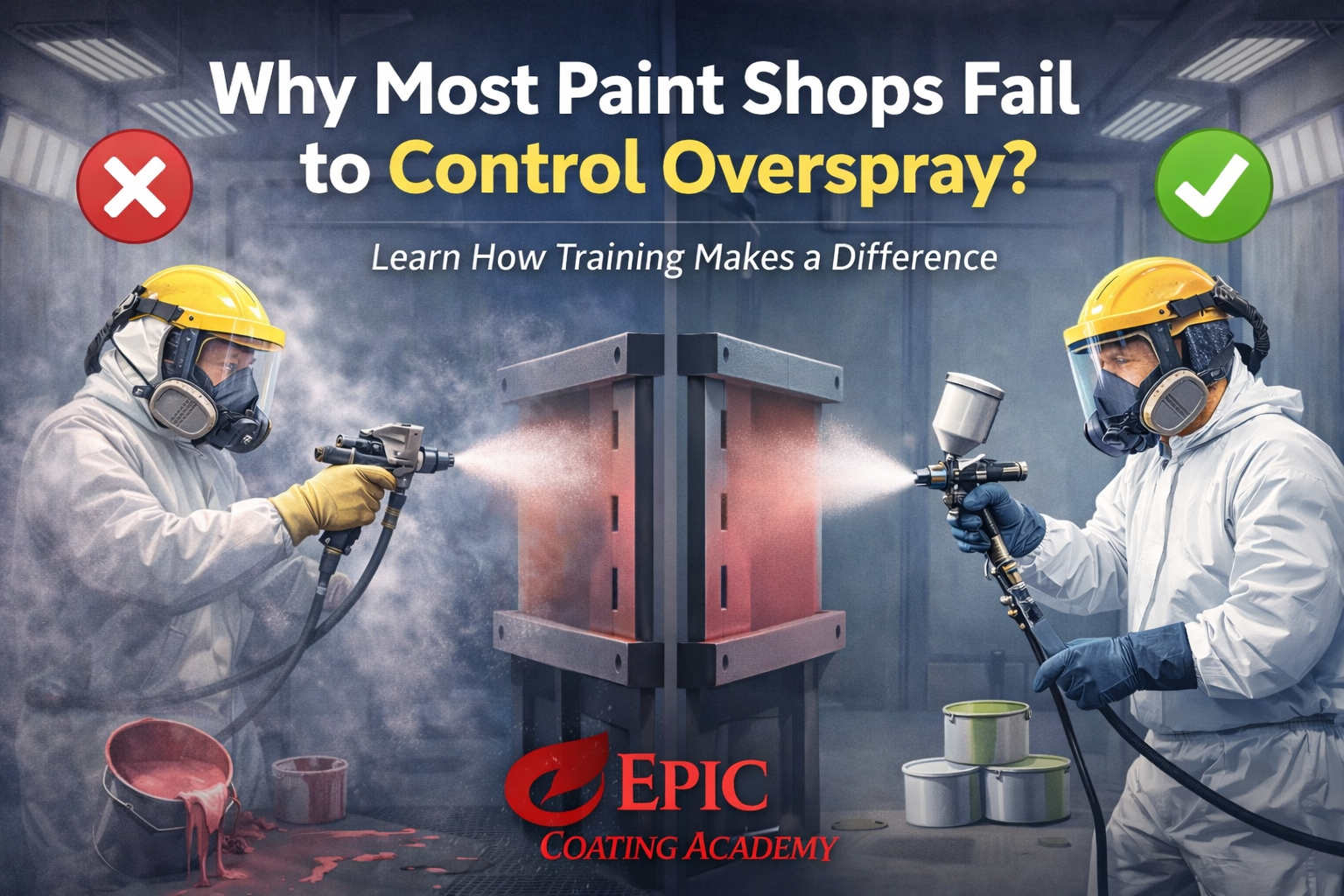
Overspray is a major hidden problem in industrial paint shops. Many paint shops treat overspray as something normal. Every day, paint can be seen floating in the air, settling on booth walls, and falling onto the floor.
But overspray is not normal.
Overspray is a skill-related issue.
Overspray increases paint costs, reduces finish quality, and lowers productivity. Most paint shops fail to control overspray not because of poor paint or machines, but because painters are not properly trained.
This article explains overspray in very simple words. It is written for students, beginners, painters, and supervisors who want practical improvement.
What Is Overspray?
Overspray is the paint that is sprayed but does not stick to the product surface.
Instead, the paint:
- Flies into the air
- Settles on booth walls
- Falls onto the floor
- Lands on nearby equipment
Overspray is pure waste.
You pay for the paint, but it never appears on the finished product. Good overspray control is a very important part of paint shop efficiency.
Why Controlling Overspray Is Important
Poor overspray control causes:
- High paint consumption
- Poor surface finish
- Dry and rough texture
- Rework and rejections
- Dirty booths and clogged filters
- Health and safety risks
Even a small reduction in overspray can save lakhs of rupees every year in medium-sized paint shops.
Common Mistakes That Cause Overspray
1. Air Pressure Mistakes
This is the most common cause of overspray.
Typical problems include:
- Air pressure set too high
- No standard pressure setting
- Different painters using different pressures
High air pressure breaks paint into very fine particles. These particles fly away instead of sticking to the surface.
Many painters believe:
“More air pressure gives a better finish.”
This is not true.
In most cases, high air pressure only increases overspray.
2. Incorrect Gun Angle
The correct spray gun angle is 90 degrees to the surface.
Common angle mistakes:
- Gun is tilted
- Spraying from the side
- Wrist bends during movement
When the gun angle is wrong:
- Paint hits unevenly
- More paint bounces back
- Overspray increases
This problem happens due to poor practice, not bad equipment.
3. Incorrect Gun Distance
Spray gun distance is very important.
Common distance mistakes:
- Holding the gun too far
- Changing distance randomly
- Not realizing when the gun is too far
When the gun is too far:
- Paint dries in the air
- Transfer efficiency drops
- Overspray increases
Most painters are never trained to keep a steady distance.
4. Very Fast and Uncontrolled Gun Movement
Many painters try to finish the job quickly. Problems caused by fast movement:
- Very quick hand motion
- Uneven overlap
- Poor trigger control
Fast spraying throws paint everywhere except where it is needed.
Speed without control always increases overspray.
5. No Operator Skill Certification
In many paint shops:
- Anyone is allowed to spray
- No skill testing is done
- No certification exists
- No refresher training is given
Painting is often treated as physical work instead of a technical skill.
This mindset leads to long-term overspray problems.
Why Do These Mistakes Continue in Paint Shops?
Overspray problems continue mainly because of lack of proper spray painting training.
Other reasons include:
- Painters learn by watching others
- Bad habits get copied
- Overspray is not measured
- Supervisors focus only on output
- No responsibility for paint loss
Without training, painters do not understand:
- Paint behavior
- Air and paint balance
- Spray physics
As a result, the same mistakes happen every day.
Step-by-Step Solution for Overspray Control
Step 1: Create Awareness About Paint Loss
Painters must understand that overspray costs money.
Actions to take:
- Show paint cost per liter
- Visually explain paint loss
- Compare good vs poor spraying
Awareness is the first step toward improvement.
Step 2: Standardize Air Pressure Settings
What should be done:
- Define correct air pressure range
- Use pressure gauges properly
- Lock standard settings where possible
Painters must understand why a pressure is used, not just the number.
Step 3: Train Correct Gun Angle and Distance
Key focus areas:
- Maintain 90-degree gun angle
- Keep steady gun distance
- Move the full arm, not only the wrist
This step alone can greatly reduce overspray.
Step 4: Improve Trigger and Movement Control
Painters should learn:
- When to pull the trigger
- When to release the trigger
- How to overlap correctly
Good trigger control prevents paint dumping at start and end points.
Step 5: Monitor and Correct Regularly
Overspray control is not a one-time activity.
You need:
- Daily observation
- Quick corrections
- Continuous feedback
Without monitoring, old habits return.
Role of Spray Painting Training
Training closes the skill gap.
Good training teaches:
- Basics of paint atomization
- Air and paint balance
- Transfer efficiency concepts
- Practical spray control
Painters learn by doing, not just listening.
Programs like BlasterX and Spray Ops Pro focus on real shop-floor problems, not theory.
How Training Improves Paint Shop Efficiency
After proper training:
- Overspray reduces
- Paint usage becomes stable
- Finish quality improves
- Rework decreases
- Booth cleanliness improves
- Painter confidence increases
Efficiency improves without adding machines or manpower.
Real-World Industrial Application
Overspray is a major cost factor in:
- Automotive painting
- Fabrication shops
- Industrial equipment coating
Companies that invested in spray painting training reported:
- 15–30% reduction in paint consumption
- Faster job completion
- Better audit results
- Improved safety compliance
Training shows visible results within weeks.
About the Training Provider
Epic Coating Academy is known for providing practical, skill-based industrial coating training.
Their programs focus on:
- Overspray control
- Painter skill development
- Real paint shop challenges
BlasterX and Spray Ops Pro help painters, operators, and supervisors meet industry standards and close skill gaps.
Conclusion
Overspray is not caused by paint. It is not a machine problem. Overspray is a training problem.
Most paint shops struggle with overspray because painters are not taught correct spray techniques. When proper training is given, overspray reduces naturally, paint shop efficiency improves, and costs go down.
If you want better results, invest in skills, not shortcuts.
Train professional painters — and overspray will stop being a problem in your paint shop.